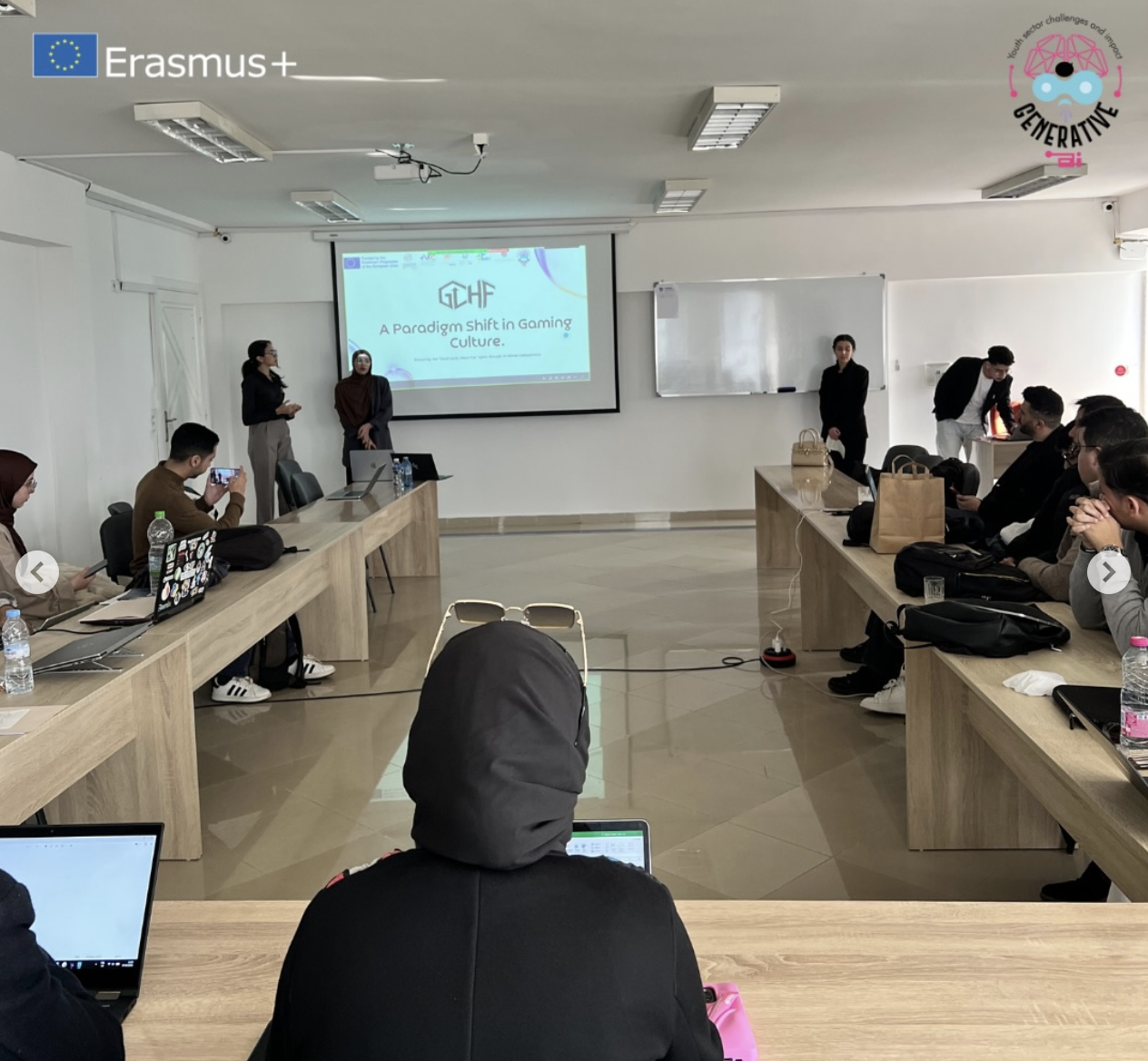
The national hackathon “Together for the Future” successfully concluded on 7 February, following several weeks of learning and interactive activities that brought together a group of ambitious young Moroccans. The initiative aimed to harness artificial intelligence for the common good and promote a culture of respect and tolerance in the digital space. The event provided a valuable platform for learning, collaboration, and innovation, giving participants the opportunity to develop creative ideas and innovative solutions to contemporary digital challenges, particularly hate speech, misinformation, and online discrimination.
A total of 30 participants were selected from more than 450 applications, reflecting young people's growing interest in digital transformation and the role of technology in creating a positive social impact. The hackathon was organised as part of a two-year international project entitled “Generative AI,” which aims to equip civil society organisations, youth workers, and young people themselves with the digital skills and critical thinking abilities needed to engage effectively with the rapid social and economic changes taking place in the age of artificial intelligence.
Amid the profound transformations driven by rapid technological development, artificial intelligence has emerged as one of the most influential tools shaping communication, work, and knowledge creation. Against this backdrop, the project seeks to promote the responsible and informed use of this technology while encouraging young people to harness its potential to strengthen democratic dialogue, combat hate speech, and build more inclusive and equitable digital spaces.
The hackathon was preceded by an intensive training programme designed to equip participants with the technical knowledge and leadership skills needed to develop innovative solutions. On 10 and 11 January, participants took part in two full days of in-person workshops covering key topics related to digital innovation and social impact.
The programme began with a workshop entitled “AI for Social Good,” which explored the various ways artificial intelligence can address social challenges. Participants were introduced to practical examples of how this technology can be used to identify and tackle harmful online content. This was followed by a workshop entitled “Design Thinking for Change,” which introduced participants to human-centred creative thinking methodologies and encouraged them to develop innovative solutions that respond to the real needs of their communities.
On the second day, the workshop “Emotional Intelligence and Self-Leadership” focused on strengthening participants' self-awareness, teamwork, and leadership skills, recognising these as essential elements in empowering young people to drive positive change within their communities. Participants also took part in a workshop entitled “Digital Storytelling and Ethical Communication,” which highlighted the importance of creating positive and responsible digital narratives that help combat hate speech and promote respect and diversity online.
The training programme concluded with a fifth workshop, “From Idea to Prototype and Project Pitching,” during which participants learned how to transform their ideas into practical prototypes that could be further developed. They also acquired essential skills for presenting their projects effectively and persuading their audiences.
To support the continued development of their projects, an online mentoring and follow-up session was organised on 31 January. This gave participants the opportunity to receive guidance from experts and mentors, refine their ideas, and improve the quality of their projects ahead of the final presentation stage.
The programme culminated in the Pitch Day on 7 February, when participating teams presented their innovative solutions during the national hackathon. The projects demonstrated a high level of creativity and commitment, with participants exploring ways to use artificial intelligence tools to develop initiatives that combat hate speech, reduce digital discrimination, and promote a culture of dialogue and tolerance in online spaces.
The event contributed to several key objectives, including encouraging innovation in the use of artificial intelligence to tackle hate speech and discriminatory online content, strengthening collaboration between civil society organisations, youth workers, and digital experts, and empowering young people to become active agents of change in building a digital culture grounded in respect and responsibility.
Beyond its competitive dimension, the hackathon also served as a dynamic space for exchanging experiences and building professional networks among participants. This helped strengthen the spirit of collaboration and establish relationships that could lead to future joint projects and initiatives.
At the conclusion of the event, the top-performing participants were given the opportunity to represent Morocco at the international hackathon in Italy, where they would present their ideas alongside young people from the other partner countries involved in the “Generative AI” project. This opportunity highlights the importance of strengthening international cooperation to address shared digital challenges.
As the project's activities continue in the coming months, the initiative is expected to further strengthen the role of young people and civil society in using technology and artificial intelligence responsibly, contributing to the development of more inclusive, tolerant, and democratic digital communities.